Japan Scholarships and American Students: What the Brochures Don't Tell You
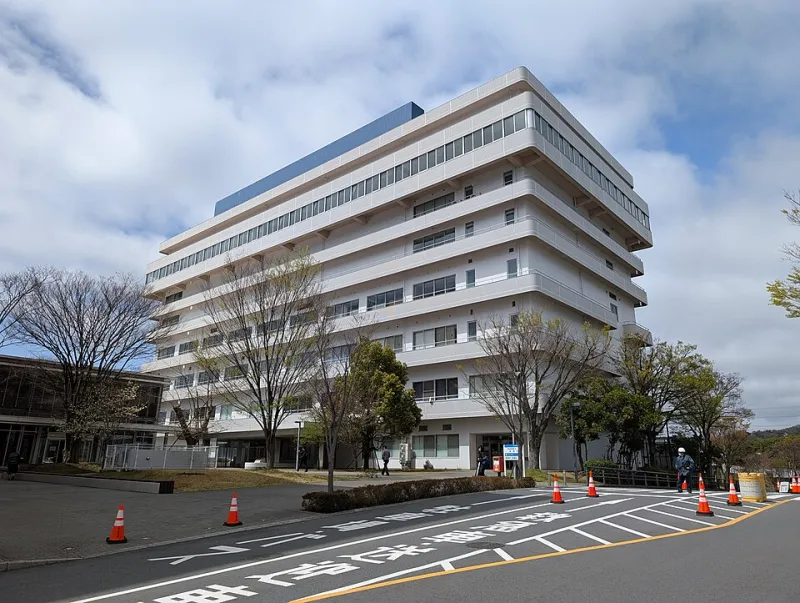
Photo: Mzaki, CC0, via Wikimedia Commons
Every year, thousands of American students begin researching study abroad in Japan with the same hopeful assumption: that scholarships will help make it affordable. University websites list awards. Government programs appear in search results. Private foundations seem to offer possibilities. The picture looks promising — until you start reading the fine print.
The reality is more complicated. Japan's scholarship infrastructure is substantial, but it was not designed primarily with American students in mind. Understanding how that system actually functions — and where American applicants genuinely fit within it — is essential before you build a budget around funding you may never receive.
How Japan's Scholarship System Is Structured
Unlike the United States, where financial aid is largely administered through universities and tied to federal programs like FAFSA, Japan's scholarship ecosystem operates through three distinct channels: the Japanese government, individual universities, and private foundations.
The Japanese government's primary scholarship program — administered through the Ministry of Education, Culture, Sports, Science and Technology, known as MEXT — is the most visible and the most frequently misunderstood. University-level awards vary enormously by institution. Private foundation grants tend to be smaller, more specialized, and often carry eligibility restrictions that quietly exclude most international applicants.
Each channel has its own application procedures, timelines, and criteria. None of them map neatly onto the aid structures American students are accustomed to navigating.
The MEXT Scholarship: Prestigious, Rare, and Highly Competitive
The MEXT scholarship is the benchmark that most American students encounter first. It covers tuition, provides a monthly living stipend, and includes round-trip airfare. For students who receive it, the award is genuinely transformative.
For most students who apply, however, it remains out of reach — not because they are unqualified, but because the program is intensely competitive and the number of awards allocated to the United States is limited. In a given year, only a small fraction of American applicants will be selected. The program prioritizes academic excellence, Japanese language proficiency, and a clearly articulated research or study purpose that aligns with Japan's national educational priorities.
There are two primary application routes: through the Japanese Embassy in Washington, D.C. (or relevant consulate), and through individual Japanese universities that have been designated to recommend candidates directly. Both pathways require significant preparation, and neither offers any guarantee of selection. Students who treat MEXT as a fallback funding option — rather than a competitive achievement requiring deliberate preparation — are setting themselves up for a budget crisis.
University-Specific Awards: Promising but Inconsistent
Many Japanese universities offer their own international student scholarships, and some of these are genuinely accessible to American applicants. The challenge is that availability, award amounts, and eligibility requirements differ substantially from one institution to the next.
At some universities, international scholarships are merit-based awards that cover a portion of tuition. At others, they function more like tuition waivers for exchange students arriving through partner institutions. A student enrolling directly in a Japanese university as a degree-seeking student will face a very different funding landscape than one arriving through an established exchange agreement with their American home institution.
It is worth noting that many university-level awards in Japan are reserved for students already enrolled and demonstrating academic performance — meaning they are not available at the point of admission when students most need to confirm their budget. This creates a planning problem that American students frequently underestimate.
Private Foundation Grants: Narrower Than They Appear
Japan has a number of private foundations that fund international students, and a handful of American organizations also offer grants for study in Japan. These awards tend to attract attention in scholarship search databases, which can give the impression of a robust funding market.
In practice, most private foundation grants for study in Japan are modest in size — often covering a semester's living expenses at best — and many carry restrictions that eliminate the majority of American applicants. Some are limited to students of Japanese heritage. Others require enrollment in specific fields of study, partnership with particular institutions, or Japanese language ability at a level most American students have not yet achieved. A few are reserved for graduate researchers rather than undergraduates.
This does not mean private foundation funding is not worth pursuing. It means that the effort required to identify genuinely applicable opportunities is significant, and the awards that result are unlikely to cover the full cost of a year abroad.
The Funding Gaps American Students Typically Face
Even students who successfully secure scholarship support — whether through MEXT, a university award, or a private grant — frequently discover that their funding does not cover everything they assumed it would.
Common gaps include:
- Pre-departure costs: Visa application fees, flights, and initial housing deposits are rarely covered by scholarships that begin disbursing after arrival.
- Health insurance and medical expenses: Some programs include coverage; many do not, or provide only partial coverage.
- Language preparation: Intensive Japanese coursework before departure, which significantly improves the study abroad experience, is an out-of-pocket expense.
- Travel within Japan: Academic and cultural exploration — which is, for many students, a core reason for studying in Japan — falls entirely outside scholarship parameters.
- Repatriation costs: Return flights and post-program expenses are not always included even in comprehensive awards.
American federal financial aid — including Pell Grants and federal loans — can sometimes be applied toward approved study abroad programs, but this depends on whether the student remains enrolled at their US home institution and whether the program qualifies. Students pursuing direct enrollment at a Japanese university, rather than a US-affiliated program, may find that their federal aid eligibility is significantly limited or eliminated entirely.
Building a Realistic Financial Plan
The most important shift American students can make is to treat scholarship funding as a potential supplement rather than a foundation. Begin with a complete, honest accounting of what studying in Japan will cost — tuition, housing, food, transportation, health coverage, and a reasonable buffer for unexpected expenses. Then map available funding sources against that figure.
Apply for every scholarship you legitimately qualify for, including MEXT if your profile is competitive. Pursue university-specific awards through your target institution. Investigate private foundations with genuine eligibility alignment. And simultaneously, explore whether your US federal aid can travel with you.
Where gaps remain — and they likely will — consider whether part-time work in Japan is feasible under your student visa terms, whether family support is available, or whether extending your savings timeline before departure makes sense.
Studying in Japan is an investment that pays dividends in ways that are difficult to quantify. But it is an investment that requires clear-eyed financial preparation. The students who thrive are rarely the ones who arrived expecting scholarships to solve the problem — they are the ones who understood the funding landscape before they booked their flights.