Sharing Space Across a Language Gap: What American Students Should Know Before Moving In with Japanese Roommates
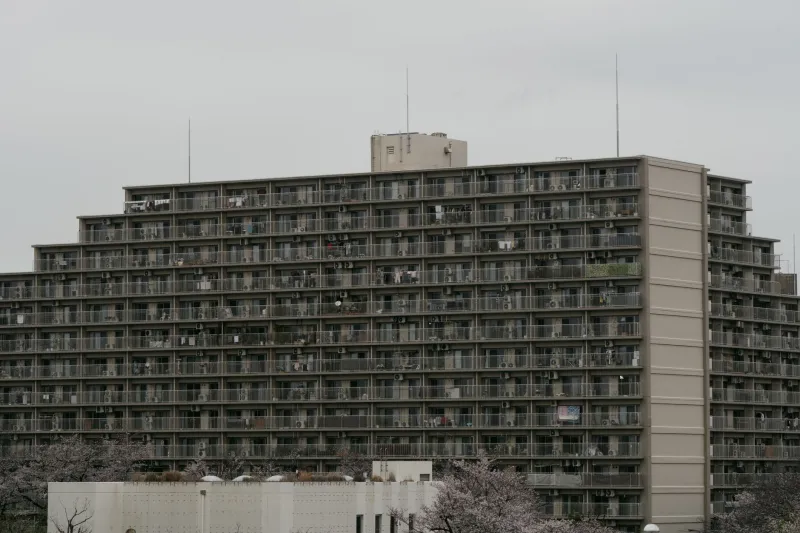
For many American students arriving in Japan, shared housing feels like an obvious win. It reduces rent, accelerates language acquisition, and offers a front-row seat to daily Japanese life. All of that can be true. But the first weeks inside a shared apartment or university dormitory can also feel like navigating a minefield you cannot see—where the rules exist, everyone follows them, and nobody explains them to you.
The good news is that most of the friction in these living situations is predictable. Understanding what to expect, and how to establish early communication patterns that actually function, makes a significant difference.
The First Misunderstanding Is Usually About Silence
American domestic culture tends to treat silence as something to fill. Background music, television left on, conversations carried from room to room—these are normal in most American households. Japanese residential culture generally operates differently. Quiet is not the absence of something; it is, in many contexts, the default condition of a respectful home.
This does not mean your Japanese roommates expect you to live like a monk. It does mean that sound travels differently in Japanese apartments—which are often smaller and more lightly constructed than American housing—and that sensitivity to noise levels, particularly during evening hours, is treated as a basic courtesy rather than an optional preference.
If you arrive playing music at a volume that feels modest to you, your roommate may say nothing. That silence is not agreement. Establishing early on that you want direct feedback—even with limited shared language—goes a long way. A simple handwritten note or a translated message through your phone saying something like "Please tell me if I am too loud. I want to be a good roommate" signals openness in a way that most Japanese students will genuinely appreciate.
Cleaning Standards Are Higher Than You Might Expect
Japanese domestic cleanliness standards are not uniform across every household, but they tend to run higher than what many American students are accustomed to. This applies particularly to shared spaces: bathrooms, kitchens, entryways, and hallways.
In many Japanese homes, there is an implicit rotation of cleaning duties that operates without being formally scheduled. Roommates observe when something needs doing and handle it. If one person consistently does not contribute to this rhythm, it registers—quietly, without confrontation—as a significant social failure.
The practical solution is to ask early and directly: "How do you usually handle cleaning here?" This question, even delivered through a translation app, communicates that you take the shared space seriously. From there, consider suggesting a simple written schedule. Even if your Japanese roommate finds the formality slightly unusual, most will welcome the clarity over the alternative, which is sustained low-level resentment.
Pay particular attention to the kitchen. Leaving dishes in the sink overnight, even briefly, is considered inconsiderate in most Japanese households. The bathroom drain, the stovetop, and the area around the front entrance (the genkan) are similarly high-visibility zones where attentiveness matters.
Guest Etiquette Is a Conversation Worth Having Early
In American college housing, having friends over—sometimes spontaneously, sometimes late—is treated as a natural part of student life. In Japanese shared housing, guests are generally expected to be infrequent, pre-announced, and gone at a reasonable hour.
This is not about hostility toward your social life. It reflects a broader cultural value around the home as a private, controlled space. Many Japanese people feel genuine discomfort when their living environment becomes unpredictably social, particularly with people they do not know.
Before you invite anyone over, have a brief conversation with your roommate. Again, a translation app is entirely acceptable here—the gesture of asking matters more than the eloquence of the delivery. Establishing a shared understanding of guest expectations in the first two weeks prevents the kind of slow-building tension that is very difficult to address once it has taken root.
When Language Fails, Systems Help
You will reach moments where your Japanese is not sufficient to handle a real disagreement, and your roommate's English may be equally limited. Preparing for this before it happens is worth the effort.
Consider creating a simple shared document—a notes app you both have access to, or even a whiteboard in the kitchen—where either of you can leave messages. Pair this with a translation tool you both agree to use when something important needs to be communicated. Google Translate's camera function, which translates written Japanese in real time, is genuinely useful in domestic contexts.
Some universities also offer mediation support through international student offices specifically for housing-related conflicts. If a disagreement escalates beyond what you can resolve through improvised communication, using that resource is not an admission of failure. It is a reasonable use of infrastructure that exists precisely for this situation.
The Unexpected Upside of Domestic Life Together
All of the above may read as a catalog of potential problems. That framing is useful for preparation, but it does not represent the full picture.
Shared housing with Japanese roommates creates conditions for genuine connection that most classroom or social settings do not. Cooking a meal together—even if the conversation is mostly gesture and laughter—builds familiarity in ways that a language exchange program rarely replicates. Watching your roommate navigate their own routines teaches you more about daily Japanese life than any cultural orientation session.
Many American students who initially approached their co-living situation with anxiety report that it became one of the most meaningful parts of their time in Japan. The key variable, in almost every case, was early investment in basic mutual understanding—not fluency, not perfect cultural knowledge, but a demonstrated willingness to pay attention and adjust.
What to Do Before You Move In
If you have any advance contact with your roommate—through a university portal, a housing coordinator, or social media—use it. A brief message introducing yourself and expressing that you are looking forward to living together, and that you hope they will feel comfortable telling you if you do anything that bothers them, sets a productive tone before you ever share a kitchen.
If you are placed in housing without prior contact, make that introduction on your first day. It does not need to be elaborate. What it needs to be is genuine.
Shared housing in Japan is, ultimately, one of the more honest tests of your adaptability as a student abroad. The language barrier is real, but it is rarely the actual source of friction. Most conflicts in shared living situations trace back to assumptions—about cleanliness, about noise, about guests, about what counts as consideration. Naming those assumptions early, and building small systems to bridge the gaps, turns a potentially difficult living arrangement into one of the more formative experiences your time in Japan has to offer.