Step-by-Step: How American Students Can Successfully Secure a Japanese Student Visa
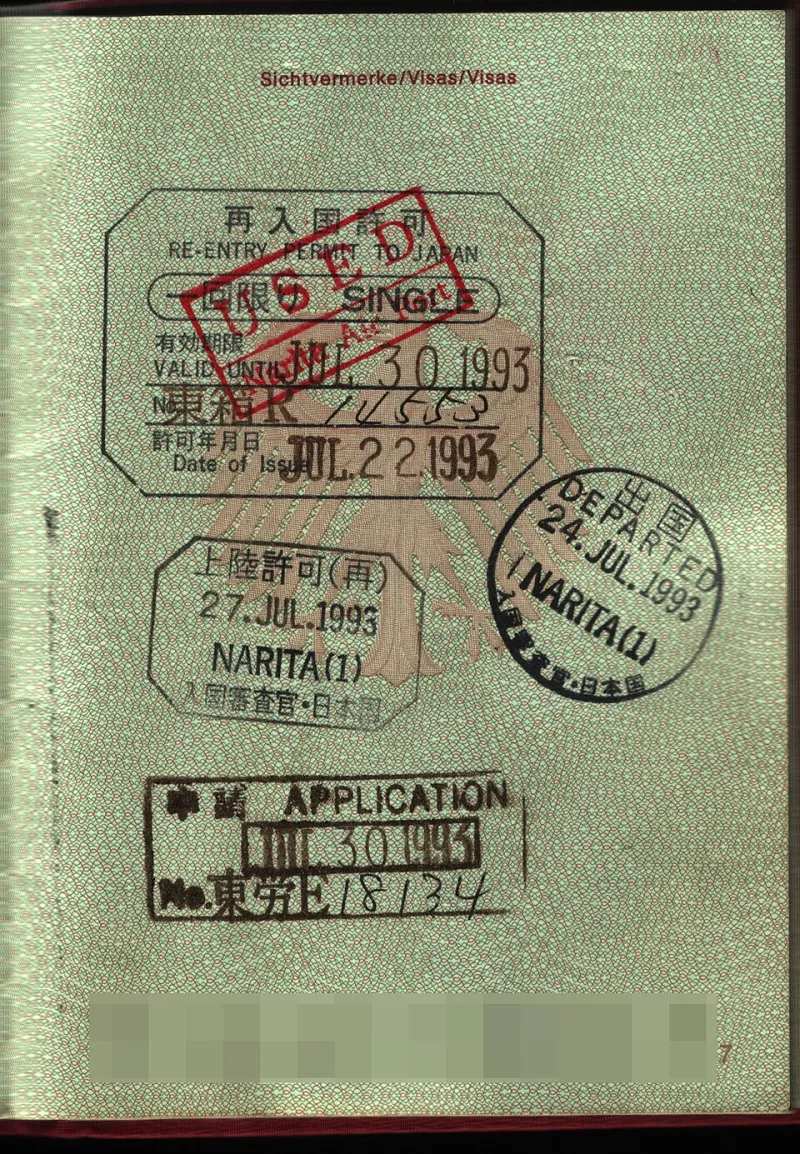
Photo: Government of Japan , Narita Airport Immigration Office, Public domain, via Wikimedia Commons
For many American students, the acceptance letter from a Japanese university feels like the finish line. In reality, it is the starting gun. Before you can enroll in a single class, you must navigate one of the more document-intensive visa processes in the international education world. Japan's student visa system rewards organization and punishes procrastination. Understanding what is required — and when — can mean the difference between arriving on time for orientation or scrambling for a last-minute flight change.
This guide is designed specifically for US citizens applying through the standard student visa ("College Student" status of residence) pathway. It covers the full application timeline, every document you will likely need, the mistakes that most commonly result in delays or rejections, and practical strategies drawn from students who have successfully made the journey.
Understanding the Two-Stage Process
One detail that surprises many American applicants is that Japan's student visa process is fundamentally two-stage. Your Japanese school or university first applies to the Japanese immigration authorities on your behalf to obtain a Certificate of Eligibility (COE). Only after that certificate is issued can you approach a Japanese consulate in the United States to apply for the actual visa stamp in your passport.
This means your timeline is partially outside your control. The COE stage is managed by your institution, not by you. The more organized and complete the documents you submit to your school, the faster they can file. Delays on your end cascade into delays on theirs.
A Month-by-Month Planning Timeline
The following schedule assumes a standard April or September enrollment date, which are the two most common intake periods at Japanese universities.
Six Months Before Enrollment Confirm your acceptance and immediately contact your school's international student office to ask about their COE application deadline. Begin gathering personal documents: your valid US passport (check that it will not expire within six months of your intended departure), financial documentation, and any academic transcripts or certificates they may require.
Four to Five Months Before Enrollment Submit all required documents to your institution so they can file the COE application with the regional Immigration Services Agency of Japan. This window matters. COE processing typically takes four to eight weeks, but backlogs — particularly around peak intake periods — can extend that timeline significantly.
Two to Three Months Before Enrollment Once your school notifies you that the COE has been issued, they will mail the original certificate to you. Do not lose this document. It is irreplaceable in the short term. With the COE in hand, you can now apply for your visa at the Japanese consulate or consular office that has jurisdiction over your US state of residence. Visa processing at the consulate level generally takes five to seven business days, though this can vary.
Four to Six Weeks Before Enrollment Confirm your visa has been issued, book your flights if you have not already, and begin preparing for arrival logistics: arranging airport pickup, confirming dormitory or housing check-in dates, and registering for the orientation sessions your institution requires.
The Document Checklist
While exact requirements vary slightly by institution and consulate, the following list covers what the vast majority of American applicants will need at some stage of the process.
For COE Application (submitted to your school):
- Completed application form provided by your institution
- Passport-sized photographs meeting Japanese specifications
- Copy of your valid US passport biographical page
- Proof of financial ability (bank statements, scholarship award letters, or a financial guarantee letter from a sponsor)
- Academic transcripts and diplomas or certificates of graduation
- A personal statement or letter of purpose (required by many institutions)
For the Visa Application (submitted to the consulate):
- Original Certificate of Eligibility
- Completed visa application form (available from the consulate's website)
- Your valid US passport
- One recent passport-sized photograph
- Application fee (currently $0 for US citizens applying for a single-entry student visa, though fees can apply for other entry types — confirm with your specific consulate)
Common Rejection Reasons and How to Avoid Them
The COE application, not the consulate visa stage, is where most problems originate. Understanding the most frequent rejection triggers can help you address them proactively.
Insufficient Financial Documentation This is the single most common stumbling block. Japanese immigration authorities want to see that you — or your sponsor — can genuinely cover tuition, living expenses, and return travel. Vague or incomplete bank statements, statements that show a large recent deposit without explanation, or documentation that does not clearly connect the funds to the named sponsor are all red flags. Provide at least three to six months of bank statements and, if a family member is sponsoring you, include a signed and notarized financial guarantee letter.
Inconsistencies Between Documents If your personal statement describes one area of study and your transcripts suggest no background in it, or if dates on documents do not align, reviewers notice. Review every document as a set before submission and ensure the narrative is coherent.
Gaps in Academic History If there is a period of time between your last enrollment and your Japanese program start date, be prepared to explain it. A brief explanatory letter addressing any gap of more than a few months is a simple precaution worth taking.
Submitting to the Wrong Consulate US residents must apply at the Japanese consulate that has jurisdiction over their state of residence — not simply the nearest Japanese diplomatic facility. Check the jurisdiction map on the Ministry of Foreign Affairs of Japan website before submitting.
Tips From Students Who Have Been Through It
Students who have navigated this process successfully share a few consistent pieces of advice. Start earlier than you think you need to. The students who encounter the fewest problems are those who treat the six-month mark as a hard deadline for beginning document collection, not a soft suggestion. Keep digital and physical copies of every document you submit. If something is lost or questioned, having a complete record allows you to respond quickly. And maintain consistent communication with your school's international student office — they have guided dozens or hundreds of students through this process and often know consulate-specific quirks that are not published anywhere.
The Japanese student visa process is thorough by design. Japan takes its immigration procedures seriously, and students who approach the application with the same rigor they brought to their academic applications tend to move through it without significant difficulty. Treat it as your first lesson in the kind of careful preparation that will serve you well throughout your time studying in Japan.