Beyond the Classroom: Building Real Friendships as an American Student in Japan
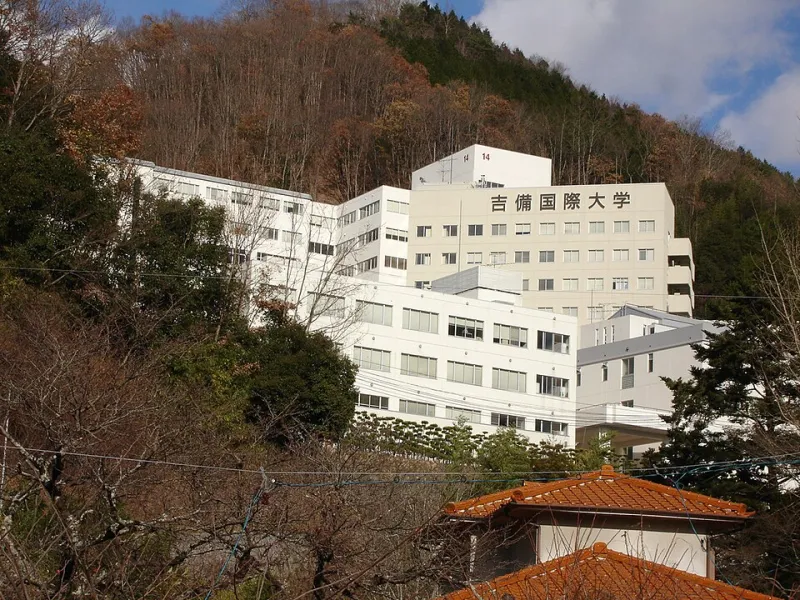
Photo: The original uploader was Setouchi at Japanese Wikipedia., CC BY-SA 3.0, via Wikimedia Commons
Let's be honest about something the glossy study abroad brochures rarely say out loud: making friends in Japan is hard. Not impossible — far from it — but genuinely, meaningfully hard in ways that catch many American students off guard. You arrive with enthusiasm, a suitcase full of optimism, and maybe a semester of Japanese language study under your belt. Then you sit in your first lecture surrounded by students who are perfectly polite and almost entirely unreachable, and you start to wonder what went wrong.
Nothing went wrong. You are simply encountering one of the more nuanced social landscapes in the world, one that operates on different rhythms, different signals, and different definitions of friendship than most Americans are used to. The good news is that once you understand the terrain, you can navigate it — and the friendships you build on the other side of that learning curve tend to be genuinely rewarding.
Why American Social Habits Don't Always Translate
American social culture tends toward openness and speed. We introduce ourselves to strangers, share personal details early, and interpret friendliness as an invitation to closeness. In Japan, the social process moves more slowly and follows more defined stages. The warmth is there — it simply expresses itself differently.
Japanese students, particularly those who have not spent significant time abroad, may find the directness of American social interaction slightly overwhelming. Asking personal questions early, making strong eye contact, or suggesting one-on-one hangouts before a group dynamic has been established can inadvertently create distance rather than connection. This is not rejection. It is a different pace.
Additionally, the concept of uchi-soto — the distinction between one's inner circle and the outside world — shapes Japanese social interaction in ways that are invisible to newcomers but deeply felt. Being treated with courtesy and consideration does not automatically mean you have been invited inside someone's inner circle. Understanding this distinction helps you stop misreading politeness as closeness and start appreciating the genuine warmth that Japanese students do extend to foreign peers.
The International Student Community: A Starting Point, Not a Destination
Most universities in Japan have a community of international students, and for many Americans, this becomes a default social home — particularly in the early weeks. There is nothing wrong with this. Bonding with other students from the US, Europe, Southeast Asia, and elsewhere provides a sense of belonging during a period when everything else feels unfamiliar. These friendships are real and valuable.
The risk is treating the international student bubble as the whole experience. If your social world at the end of your program consists entirely of other foreigners, you will have missed one of the most significant opportunities that studying in Japan offers. Push yourself to use the international community as a foundation, not a ceiling.
Practical Strategies That Actually Work
So what does work? Students who form genuine friendships with Japanese peers consistently point to a few specific approaches.
Join a club or circle (bukatsu or circle) early. Japanese university clubs and student circles are not just extracurricular activities — they are the primary social infrastructure through which Japanese students build their closest friendships. Whether it is a sports team, a music ensemble, a film appreciation group, or a hiking club, regular shared activity over time creates the kind of low-pressure, repeated contact that Japanese social dynamics tend to favor. Show up consistently. Be reliable. Let the friendship develop at its own pace.
Invest in language, even imperfectly. You do not need to be fluent. What matters is that you try. Making the effort to communicate in Japanese — stumbling through it, laughing at your own mistakes, asking for help — signals genuine respect and interest in ways that speaking only English never can. Many Japanese students are also eager to practice their English, which creates a natural exchange dynamic. Language exchange partnerships (tandem or language exchange) are a well-worn path to genuine connection.
Attend university events and orientation programs designed for mixed groups. Many Japanese universities organize events specifically intended to bring Japanese and international students together. These are not always thrilling — some are awkward, some are overly structured — but they are one of the few settings where Japanese students are explicitly primed to engage with foreign peers. Attend them, even when you don't feel like it, especially in the first semester.
Be patient with silence. In American social contexts, silence in conversation often signals discomfort or disinterest. In Japan, it frequently signals thoughtfulness. Learning to sit comfortably with pauses, rather than filling them anxiously, will make you a more natural conversation partner for Japanese peers.
Dealing With Homesickness Honestly
Homesickness is not a sign that you made the wrong decision. It is a normal response to displacement, and it tends to peak around the six-to-eight-week mark — right around the time the novelty of being in Japan has faded and the reality of long-term distance from home sets in.
The most effective approach is not to suppress it but to acknowledge it and build structure around it. Schedule regular video calls with family and close friends back home, but be intentional about not letting those calls become your primary social outlet. The goal is to feel supported from a distance while still investing emotionally in the life you are building in Japan.
Some students find that getting out of the campus environment entirely — exploring a new neighborhood, taking a day trip to a nearby city, visiting a local market — resets their perspective when the walls start closing in. Japan is extraordinarily rich in accessible, low-cost experiences that remind you why you came in the first place.
The Long Game
Friendships built in Japan often follow a trajectory that feels slower than what American students are used to, but they tend to deepen in ways that are genuinely lasting. The Japanese students who eventually do invite you into their inner circle — to a family dinner, a private gathering, a late-night conversation about something that actually matters — are often extending a level of trust they extend to very few people. That is worth being patient for.
Building a social life in Japan as an American student is not about performing cultural fluency or abandoning who you are. It is about being curious, being consistent, and being willing to let connection develop on a timeline that is not entirely your own. The students who leave Japan with deep friendships are almost always the ones who stopped trying to make Japan feel like home and started letting Japan become one.