Choosing a Japanese University: Why Rankings Tell Only Half the Story for International Students

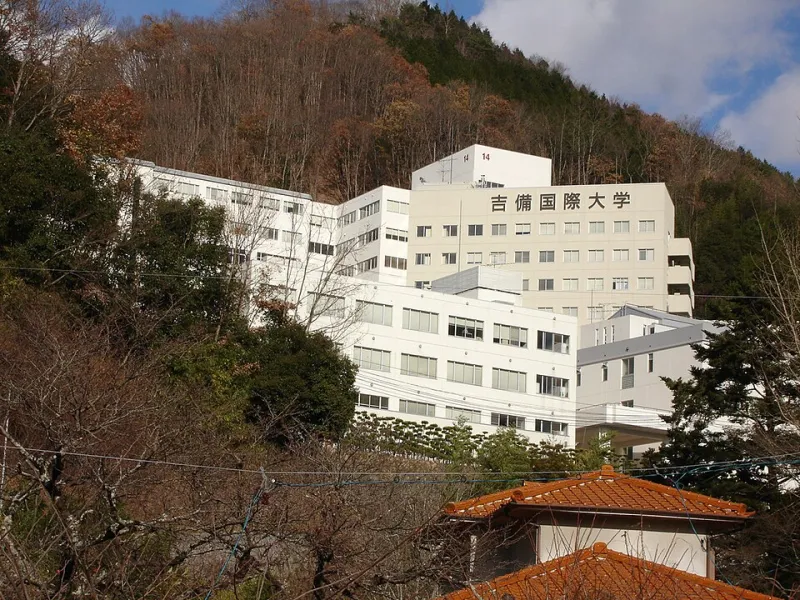
Photo: TUJCommunications, CC BY-SA 4.0, via Wikimedia Commons
When American students begin researching universities in Japan, the instinct is often to reach for a ranking—QS World University Rankings, the Times Higher Education list, or Japan's own internal classification system. These tables are not without value, but for international students making decisions from abroad, relying on them too heavily can lead to significant mismatches between expectation and experience. The factors that elevate a Japanese institution in a global ranking are not always the factors that determine whether an American student will thrive, graduate successfully, and emerge with meaningful career prospects.
This guide is designed to help you ask better questions before committing to a program.
What Rankings Actually Measure—and What They Miss
Global university rankings typically assess institutions on metrics such as research output, faculty citation counts, academic reputation surveys, and the ratio of international students and staff. These are legitimate indicators of research prestige, but they say relatively little about the undergraduate teaching experience, the availability of English-language instruction, or the social infrastructure available to international students.
For context: the University of Tokyo consistently ranks among the top universities in Asia and the top 30 globally. That is a meaningful credential. However, the majority of its degree programs are conducted entirely in Japanese, its undergraduate curriculum can be highly structured and lecture-heavy, and its campus culture—while intellectually rigorous—can feel isolating for students who have not yet developed strong Japanese language skills. A highly ranked institution is not automatically the right institution for every student.
Conversely, several mid-tier universities in Japan have invested heavily in international student infrastructure, offer fully English-taught degree programs, and maintain active partnerships with American universities that facilitate smoother credit transfers and alumni networking.
The English-Taught Program Question
For American students who do not yet speak Japanese at an academic level, the availability of English-taught programs is not a minor logistical detail—it is a foundational requirement. Japan has expanded its English-medium instruction significantly over the past decade, partly in response to government initiatives such as the Top Global University Project, which encouraged institutions to internationalize their curricula.
Some universities have developed dedicated English-taught degree tracks that extend across all four years. Waseda University's School of International Liberal Studies (SILS), for instance, delivers its full curriculum in English and attracts a genuinely diverse international student body. Similarly, Ritsumeikan Asia Pacific University (APU) in Beppu operates on a bilingual model, with roughly half of its student population drawn from outside Japan.
Other universities offer English-taught courses only at the introductory level, then transition to Japanese-medium instruction as students advance. If you are planning a full degree program rather than a one- or two-semester exchange, this distinction matters enormously. Verify the language of instruction not just for the program overall, but for the specific courses required in your chosen field.
Field-Specific Strengths: Looking Beyond the Overall Ranking
A university's overall global ranking often obscures significant variation in quality across its individual departments. Japan has particular concentrations of excellence in specific fields that do not always translate to top-tier overall rankings for the institutions housing them.
Engineering and applied sciences, for example, are areas where Japanese universities have historically excelled. Institutions such as Tokyo Institute of Technology, Osaka University, and Tohoku University maintain research programs in robotics, materials science, and electrical engineering that are genuinely world-class. If your intended field of study aligns with Japan's industrial and technological strengths, a university ranked lower overall may offer a superior academic environment for your specific goals.
Business and humanities programs present a more mixed picture. Japan's business education landscape has traditionally been less internationally oriented than its counterparts in the United States or Europe, though this is changing. Students pursuing international business, Japanese studies, or East Asian cultural programs will find strong offerings at institutions that may not rank prominently in STEM-weighted global tables.
The practical recommendation: consult field-specific rankings and, where possible, review faculty research profiles and course syllabi in your intended department before making a final decision.
Location as a Curriculum
Where a university is located in Japan shapes the student experience in ways that no ranking can quantify. Tokyo and Osaka offer unmatched access to internship opportunities, professional networks, cultural events, and English-speaking communities. Students studying in these cities can more easily build the kind of extracurricular professional experience that complements academic credentials.
However, urban campuses in Japan's major cities also tend to be more expensive, more competitive for housing, and—in some cases—less cohesive as social communities, since students disperse across large metropolitan areas after class.
Smaller cities such as Kyoto, Sendai, and Kanazawa offer a more contained campus experience, closer proximity to traditional Japanese culture, and lower living costs. Kyoto in particular, home to Kyoto University and Doshisha University, provides a uniquely immersive environment for students drawn to Japanese history, art, and traditional culture. The trade-off is reduced access to the professional networks concentrated in Japan's largest cities.
There is no universally correct answer here. The right location depends on your priorities—career development, cultural immersion, language acquisition, or cost management—and the degree to which these factors align with your longer-term goals.
Campus Culture and International Student Support
The presence of a robust international student office, dedicated language support services, peer mentorship programs, and active international student organizations can make a decisive difference in how smoothly an American student adapts to life in Japan. These resources are not uniformly distributed across institutions, and they are rarely reflected in ranking tables.
When evaluating a university, look specifically for: the size of the existing international student population, the availability of English-language administrative support, the presence of student clubs that facilitate interaction between Japanese and international students, and the quality of on-campus housing options for international students. Many universities publish this information in their international student prospectuses; others require direct inquiry.
Speaking with current or former international students at a given institution is among the most reliable ways to assess these factors honestly. Online forums, university-specific subreddits, and organizations such as the Association of International Students in Japan can connect you with people who have firsthand experience.
Alumni Outcomes: The Question Worth Asking
Ultimately, one of the most useful questions you can ask about any Japanese university is: Where do graduates actually go? For American students, this means examining not just Japanese employment outcomes, but the pathways available for returning to the US job market or pursuing graduate education.
Some Japanese universities have cultivated strong relationships with multinational corporations that recruit internationally. Others have alumni networks concentrated almost entirely within Japanese domestic industries, which may or may not align with your aspirations. Ask admissions offices directly about graduate outcomes for international students, and request data specifically—not anecdotes.
Choosing a university in Japan is a decision with long-term consequences, and it deserves more than a cursory glance at a ranked list. The institution that will serve you best is the one whose programs, culture, location, and alumni network align with who you are and where you intend to go—not simply the one with the highest number in a column.