Paying the Foreign Premium: What International Students in Japan Are Charged Extra For — and How to Push Back

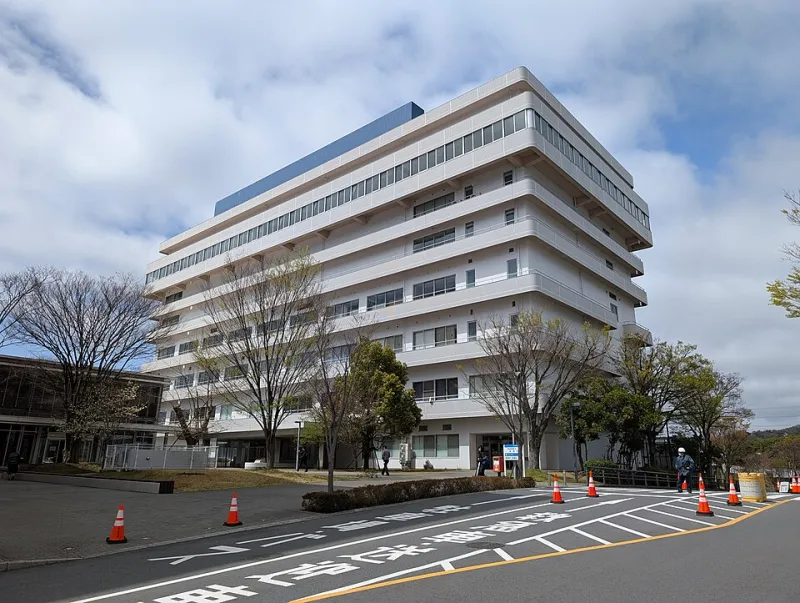
Photo: Snowpeach, CC BY 4.0, via Wikimedia Commons
There is an informal term that circulates among long-term foreign residents in Japan: the "gaijin tax." It does not appear on any official invoice. No government agency endorses it. Yet American students who have spent even a semester in Japan will recognize it immediately — the moment a landlord requests double the standard security deposit, or a mobile carrier quotes a plan that costs noticeably more than what the website advertises in Japanese. The foreign premium is real, it is pervasive, and it costs international students far more than most anticipate when building their study-abroad budgets.
This article examines where these additional costs most commonly appear, why they exist, and — most importantly — what you can do to minimize them.
Why the Foreign Premium Exists in the First Place
Before treating every surcharge as bad faith, it helps to understand the structural logic behind many of these costs. Japan operates on a high-trust, long-term relationship model. Landlords, banks, and service providers extend credit and contracts based on an established track record within Japanese society — a credit history, a Japanese guarantor, long-term residency. International students, almost by definition, lack all three. From a risk-management perspective, institutions compensate for that uncertainty by charging more upfront or attaching stricter conditions.
That said, not every premium reflects genuine risk assessment. Some pricing disparities stem from the assumption that foreign customers will not negotiate, will not read the fine print in Japanese, or will simply accept whatever terms are presented. Knowing the difference between a structurally justified cost and an opportunistic one is the first step toward addressing both.
Apartment Hunting: Where the Costs Stack Up Fast
Housing is where the foreign premium hits hardest. Standard Japanese rental agreements already involve substantial upfront costs — key money (reikin), security deposits (shikikin), agency fees, and administrative charges. For international students, several of these figures tend to be inflated.
Security deposits are the most common point of disparity. While a Japanese renter might be asked for one month's rent as a deposit, foreign applicants frequently encounter requests for two or even three months. Some landlords require an additional "foreigner guarantee" fee on top of the standard guarantor arrangement. In Tokyo and other major university cities, it is not unusual for an American student's move-in costs to exceed those of a Japanese classmate renting a comparable unit in the same building.
What you can do: Start your housing search through your university's international student office rather than going directly to general real estate platforms. Many universities maintain relationships with landlords who have agreed to standard terms for international students, eliminating the ad hoc negotiation entirely. Platforms specifically designed for foreign residents — such as Sakura House or Fontana — also operate on fixed, transparent pricing structures that remove much of the ambiguity. If you do engage a standard real estate agent, bringing a Japanese-speaking advocate, whether a university staff member or a trusted peer, signals to the landlord that you understand the process and are less likely to accept inflated terms without scrutiny.
Mobile Phone Contracts: Reading What the Brochure Doesn't Say
Major Japanese carriers — NTT Docomo, SoftBank, and au — typically require a Japanese credit card or bank account to activate a postpaid contract. International students who arrive without an established banking relationship are frequently steered toward prepaid SIM cards or short-term plans that carry a meaningfully higher per-gigabyte cost than the standard two-year postpaid contracts available to residents.
Beyond pricing, some carriers impose a deposit requirement for foreign nationals on student visas, particularly those on shorter-duration programs. This deposit, which can range from ¥10,000 to ¥30,000, is recoverable at contract end but represents real cash tied up during your enrollment period.
What you can do: MVNOs — mobile virtual network operators that lease capacity from the major carriers — frequently impose no nationality-based conditions and offer competitive data pricing. IIJmio, Mineo, and Rakuten Mobile are among the most commonly used by international students. Rakuten Mobile in particular has an entirely app-based signup process that does not require a Japanese credit card. If you do want a major carrier contract, opening a Japan Post Bank (Yucho) account first — which has relatively accessible requirements for foreign nationals — and linking it as your payment method can qualify you for standard postpaid rates.
Banking: The Hidden Costs of Being Unbanked on Arrival
International students who cannot immediately open a Japanese bank account face a cascading set of expenses. ATM withdrawal fees for foreign-issued cards at Japanese convenience store ATMs typically run between ¥110 and ¥220 per transaction, plus whatever your American bank charges on its end. For a student making multiple withdrawals per week, this adds up to a meaningful annual sum.
Some banks also charge foreign nationals an account maintenance fee that is waived for Japanese residents, or require a minimum deposit that functions as a de facto barrier to entry.
What you can do: Open a Japan Post Bank account as early as possible after arrival — it is widely regarded as the most accessible option for newly arrived foreign nationals. Simultaneously, before you leave the United States, open a Schwab Bank checking account or a Wise multi-currency account. Both are structured to minimize or entirely eliminate international ATM fees, which reduces your exposure during the weeks before your Japanese account is fully operational.
Enrollment in Services: Gyms, Subscriptions, and Beyond
Smaller-scale foreign premiums appear in less obvious places. Certain gyms in Japan charge foreign members a higher initiation fee, citing the need for "additional administrative processing" of foreign identification. Some language schools and private tutoring services quote higher rates to non-Japanese enrollees. Even certain co-working spaces near university campuses have tiered pricing that effectively places foreign short-term users at a disadvantage relative to long-term Japanese members.
What you can do: For gyms and fitness facilities, prioritize those operated by your university or affiliated with student organizations, where pricing is standardized. For any service where you suspect a foreign premium, ask directly — in writing if possible — whether the quoted rate is the same rate offered to Japanese customers. The act of asking, particularly if done in Japanese or with a Japanese-speaking intermediary, frequently results in the standard rate being applied without further discussion.
The Most Effective Tool: Building Local Credibility Early
Across every category — housing, mobile contracts, banking, services — the single most effective countermeasure is the same: establish local credibility as quickly as possible after arrival. This means opening a bank account in the first week, registering your residence at the local municipal office (shiyakusho) promptly, obtaining your residence card (zairyu card), and building a paper trail that demonstrates you are a legitimate, long-term-enrolled student rather than a transient visitor.
Institutions that impose foreign premiums are, in most cases, responding to perceived risk and uncertainty. A student who arrives with documentation, a university affiliation letter, and a basic understanding of how Japanese financial and administrative systems work presents a fundamentally different risk profile than one who does not. The premium shrinks accordingly.
A Final Note on Negotiation
American students are often culturally conditioned to negotiate assertively, which can create friction in Japan's more indirect communication environment. Effective negotiation here rarely involves confrontation. It involves asking clarifying questions, presenting alternative documentation, referencing standard terms, and — when necessary — simply choosing a provider whose pricing structure does not include a foreign surcharge in the first place. The market for international-student-friendly services in Japan has grown considerably over the past decade. Competition, more than argument, is your most reliable ally.