Close but Distant: Understanding Why Deep Friendships Take Longer to Form in Japan
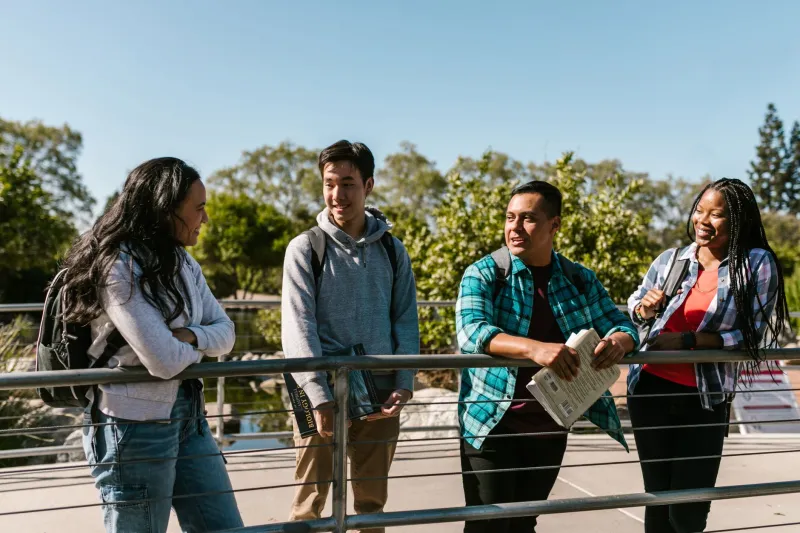
There is a particular kind of loneliness that comes not from isolation but from proximity. Many American students studying in Japan describe it this way: surrounded by people, welcomed into groups, included in activities — and yet, somehow, not truly known by anyone. Weeks pass. Months pass. The friendliness continues, but the depth does not arrive. It is one of the most disorienting social experiences a student can have, and it is far more common than orientation materials tend to acknowledge.
Understanding why this happens — and what can realistically be done about it — requires setting aside the assumption that friendship works the same way everywhere.
Two Different Starting Points
American social culture tends to front-load warmth. Conversations with strangers move quickly toward personal topics. First meetings often involve humor, self-disclosure, and an implicit invitation to continue the relationship. The message is: I am open, I am interested, let's see where this goes. This is not superficiality — it is a genuine cultural norm in which openness signals good faith.
Japanese social culture operates differently, and not because people are less warm or less interested in connection. The process is simply structured around a longer runway. Initial interactions tend to stay within well-defined registers of politeness, and personal disclosure comes gradually, often over many shared experiences rather than a single conversation. Trust is built through consistency and time, not through early vulnerability.
For American students accustomed to the first model, the second can read as coldness, disinterest, or rejection. It is rarely any of those things. It is, more often, a different timeline operating by different rules.
The Concept of Tatemae and Its Social Function
One of the most frequently misunderstood aspects of Japanese social interaction is the distinction between tatemae (the public face, or what is expressed in social situations) and honne (genuine feelings and desires). These are not concepts unique to Japan — every culture has some version of social performance — but in Japan, the gap between public expression and private feeling is wider, more deliberate, and more carefully maintained.
This means that a Japanese classmate who seems enthusiastic about spending time with you may genuinely enjoy your company while also being nowhere near ready to consider the relationship a close friendship. The enthusiasm is real. The distance is also real. Both coexist without contradiction in ways that American students often find difficult to parse.
Attempting to accelerate intimacy — asking direct personal questions early, expressing strong emotions openly, or pressing for candid opinions — can inadvertently make Japanese peers uncomfortable, not because they dislike you, but because you are moving faster than the social structure allows. The relationship may then become more guarded, not less, which only deepens the sense of distance.
Group Belonging Is Not the Same as Individual Connection
Japanese university social life is heavily organized around groups — seminar cohorts, club memberships, part-time job networks, and dormitory communities. Being accepted into a group is meaningful and should not be dismissed. But group belonging and individual friendship are not the same thing, and conflating them is a common source of confusion for American students.
You may be warmly included in a circle of students, invited to group meals, included in group chat threads, and treated with consistent friendliness — while none of the individuals in that group has yet formed a distinct personal bond with you. The group is the primary unit of social trust. Individual closeness tends to develop later, often as a byproduct of sustained shared experience within the group context.
This dynamic can feel like being accepted and excluded simultaneously. In a sense, you are — accepted into the social structure, not yet admitted into individual relationships within it.
What Actually Accelerates Connection
Despite the longer timeline, certain conditions genuinely accelerate the development of friendship for American students in Japan.
Consistency matters more than intensity. Showing up repeatedly — to the same club, the same study group, the same part-time job — signals reliability in a way that one memorable conversation does not. Japanese friendships tend to deepen through accumulated shared time rather than through singular moments of connection.
Shared effort creates particular closeness. Students who join clubs or organizations that involve working toward a common goal — a sports team preparing for a tournament, a cultural festival committee, a research lab — tend to report faster and more meaningful social integration than those who participate in more casual settings. The shared investment generates a context for trust to develop organically.
Language investment signals genuine interest. Even imperfect Japanese communicates something that English cannot: that you are willing to meet people on their terms. This does not mean you must be fluent. It means that attempting Japanese, laughing at your own mistakes, and persisting through awkward exchanges sends a message that resonates deeply in a culture where effort and sincerity are valued.
Smaller settings outperform larger ones. One-on-one or small group interactions, particularly in informal contexts like cooking together, studying side by side, or taking a short trip, tend to generate more genuine exchange than large group gatherings. If you are waiting for a group event to bring you closer to someone, you may be waiting a long time. Suggesting a smaller, lower-stakes activity is often more productive.
Managing the Emotional Weight
It would be dishonest to suggest that understanding the cultural mechanics of Japanese friendship-building makes the experience of loneliness disappear. It does not. Knowing why something is hard does not always make it easier to endure.
American students who struggle most tend to be those who measure social success by American standards — expecting depth within weeks, interpreting politeness as closeness, and feeling personally rejected when the relationship does not deepen on their expected schedule. Recalibrating that timeline is genuinely difficult, particularly for students who were socially confident at home and are now navigating a social environment where their usual instincts do not apply.
Building a parallel social network — through international student organizations, language exchange programs, or communities of other international students — can provide a necessary emotional foundation while longer-term Japanese friendships develop. This is not a consolation prize. It is a practical acknowledgment that you need genuine connection throughout your time in Japan, not only after you have mastered the cultural learning curve.
The Friendships That Do Develop Are Worth the Wait
Students who remain in Japan long enough, and who invest consistently in the conditions described above, frequently describe their Japanese friendships as among the most meaningful of their lives. The depth that takes longer to arrive tends to be more durable once it does. The effort required to reach it creates a foundation that both parties recognize and value.
The paradox of Japanese social life is not that connection is impossible — it is that it operates by a logic that rewards patience, consistency, and the willingness to follow someone else's timeline. For American students accustomed to a faster social rhythm, that adjustment is real and takes work. But the destination, for those who persist, is not a lesser version of friendship. It is simply a different path to the same place.