Getting Medical Care in Japan as an International Student: What You Need to Know Before You Need It
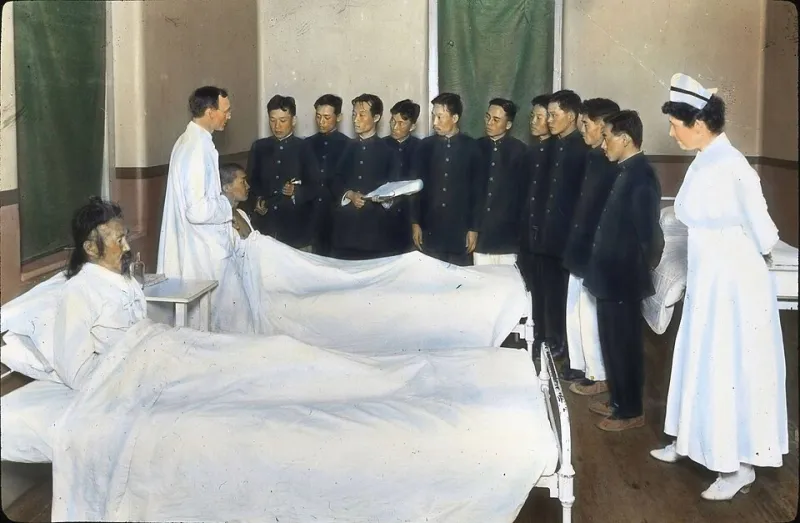
Photo: Methodist Episcopal Church, Public domain, via Wikimedia Commons
Japan consistently ranks among the world's top healthcare systems by virtually every international measure. Hospitals are generally well-equipped, wait times at many facilities are manageable, and the cost of treatment — particularly relative to American standards — can feel remarkably reasonable. For American students arriving from a country where a single emergency room visit can generate thousands of dollars in out-of-pocket expenses, Japan's medical infrastructure can seem almost reassuringly orderly.
And yet, every year, international students in Japan find themselves confused, underprepared, or simply unaware of how the system actually works when they need it most. The gap between theoretical coverage and real-world experience is wider than most pre-departure orientations acknowledge. This guide is designed to close that gap.
Understanding the National Health Insurance System
All residents of Japan — including international students enrolled in degree programs longer than three months — are required by law to enroll in Japan's National Health Insurance (Kokumin Kenkō Hoken, or NHI). This is not optional, and your university's administrative office will typically facilitate enrollment during the initial registration process.
Once enrolled, NHI generally covers 70 percent of eligible medical costs, leaving the patient responsible for the remaining 30 percent. For students, monthly premiums are assessed on a sliding scale based on income — and since most students report little to no income, premiums are often set at a low base rate, sometimes as little as a few hundred yen per month depending on the municipality.
However, it is important to understand what NHI does and does not cover. Most standard outpatient visits, hospitalizations, prescription medications, and diagnostic procedures fall within the covered framework. Dental care is covered for necessary procedures but not for cosmetic or elective work. Vision care, including eyeglasses and contact lenses, is generally not covered. Mental health treatment through licensed psychiatrists and clinical psychologists operating within the NHI framework is covered, though access varies by location.
Many universities also offer supplemental student insurance plans that reduce the 30 percent co-payment further or extend coverage to areas NHI does not reach. Review your institution's specific offerings carefully during enrollment — these supplemental plans are frequently underutilized simply because students do not know they exist.
Navigating a Medical Visit When English Is Your First Language
Finding medical care in Japan as an English-speaking patient requires some advance preparation. While major urban centers — Tokyo, Osaka, Kyoto, Nagoya — have a reasonable number of clinics and hospitals with English-speaking staff or interpreter services, smaller cities and rural areas may have very limited options.
Your university's international student office is your most reliable first resource. Most institutions maintain a list of local medical facilities with English-language capacity, and some have formal referral arrangements with specific clinics. Identify these resources before you need them — not during a moment of physical distress.
For non-emergency situations, Japan's clinic system operates somewhat differently from the American model. Rather than scheduling an appointment weeks in advance with a primary care physician, patients often walk into a local clinic (chiiki no shinryōjo) during open hours and wait to be seen. Bring your NHI card and any supplemental insurance documentation every time. It is also advisable to carry a written summary of your medical history, current medications, and any known allergies in both English and Japanese — many international student offices can assist with translation, and apps such as MediBridge or VoiceTra can serve as real-time language support tools in a pinch.
For genuine emergencies, dial 119 for an ambulance. Emergency departments (kyūkyū gairai) at large hospitals are equipped to handle critical situations regardless of language capacity, though communication will be easier if you can provide basic information in Japanese or have a bilingual contact who can speak with medical staff on your behalf.
Mental Health Support: Accessing Care in a Different Cultural Context
This is the area where the gap between what students need and what most guides provide is most pronounced.
Mental health in Japan is a topic that has historically carried more social stigma than it does in the United States, where awareness campaigns and campus counseling culture have normalized help-seeking behavior to a significant degree. Japanese university students experiencing psychological distress are less likely, on average, to seek formal mental health support than their American counterparts — and this cultural context shapes the resources available and how they are presented.
That said, resources do exist, and they are more accessible than they were even a decade ago.
Most Japanese universities have student counseling centers (gakusei sōdanshitsu) that offer free or low-cost sessions with counselors or psychologists. Quality and availability vary considerably by institution. At larger national and private universities, these centers are often staffed by trained professionals and can accommodate international students, sometimes with English-speaking counselors on rotation. At smaller institutions, services may be more limited.
For students who prefer or require English-language mental health support, several options exist. The Tokyo English Life Line (TELL) provides telephone and chat counseling services in English and has been a longstanding resource for the international community in Japan. AMDA International Medical Information Center offers multilingual health consultations. Online therapy platforms such as BetterHelp and Talkspace, which many American students are already familiar with, remain accessible from Japan and can serve as a continuity-of-care bridge for students who had established therapeutic relationships before departing.
If you are currently receiving mental health treatment in the United States, discuss your study abroad plans with your provider well before departure. Arrange for adequate medication supplies — importing psychiatric medications into Japan requires advance documentation and must comply with Japanese pharmaceutical regulations, some of which are stricter than American students expect. Certain medications commonly prescribed in the US, including some ADHD medications, are controlled substances in Japan and cannot be brought into the country without prior authorization or, in some cases, at all. Research your specific medications through the Japanese Embassy or consulate before you travel.
Building a Personal Health Plan Before You Depart
The students who navigate healthcare in Japan most successfully are those who treat medical preparation as part of their pre-departure checklist rather than an afterthought. Before you leave the United States, take the following steps:
- Schedule a comprehensive medical and dental checkup, and address any outstanding issues before departure.
- Obtain a written summary of your medical history, medications, and allergies in both English and Japanese.
- Research your university's supplemental insurance options and enroll promptly upon arrival.
- Identify the nearest English-friendly clinic and hospital to your campus or dormitory.
- Save emergency contacts — including your university's international student office, the nearest English-language medical helpline, and your country's embassy — in your phone before you need them.
- If mental health support is part of your current routine, make continuity arrangements before you board the plane.
Japan's healthcare system can genuinely serve you well as an international student. The key is understanding how it works, knowing where the gaps are, and preparing for those gaps in advance. Medical situations are stressful under any circumstances — removing the uncertainty of an unfamiliar system from the equation is one of the most practical investments you can make in your study abroad experience.