Reading the Room: What Japanese Universities Communicate Without Ever Saying a Word
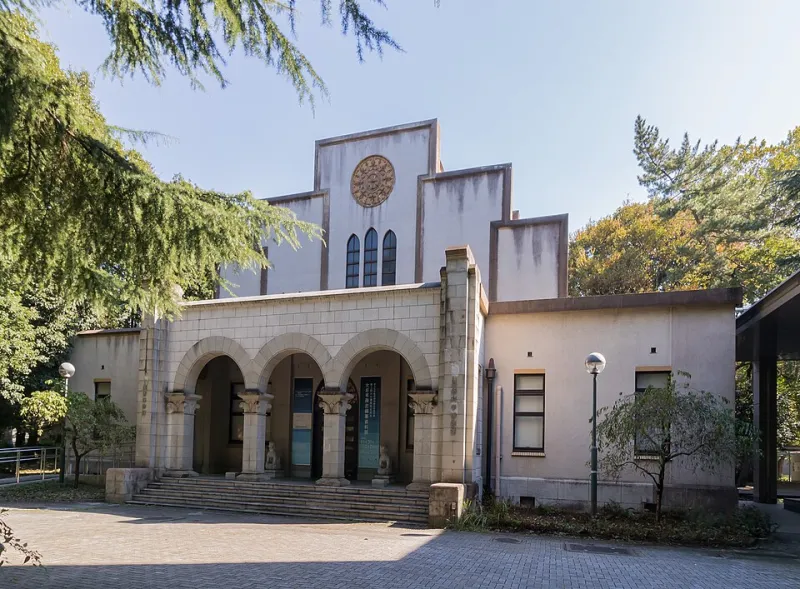
Photo: 和子, CC BY-SA 4.0, via Wikimedia Commons
American students arrive at Japanese universities carrying a particular set of assumptions about how academic life works. They expect syllabi with clear grading rubrics, professors who welcome debate, and feedback that tells them precisely where they stand. What they encounter instead is something far more layered — a system that communicates as much through what it withholds as through what it provides. Understanding this hidden curriculum is not merely an academic exercise. It is the difference between spending a year feeling perpetually confused and actually thriving within one of the world's most distinctive educational cultures.
The Philosophy Beneath the Surface
Japanese higher education did not develop in isolation. It draws on Confucian principles that have shaped East Asian intellectual life for centuries, emphasizing the relationship between teacher and student as fundamentally hierarchical and, in many respects, sacred. The professor is not simply an expert delivering content — the professor embodies a form of accumulated wisdom that the student is expected to receive with humility, patience, and sustained effort over time.
This philosophical foundation has practical consequences that American students rarely anticipate. In a US classroom, questioning a professor's argument is often encouraged as evidence of critical thinking. In a Japanese seminar, the same behavior may be interpreted as disrespectful, immature, or socially disruptive. The issue is not that Japanese academics are uncritical thinkers — quite the opposite. It is that critical inquiry tends to occur through different channels, at different moments, and in forms that require careful reading to recognize.
Silence as a Form of Communication
One of the most disorienting experiences for American students is the silence. It appears in seminars where no one volunteers an answer. It appears in professors' responses that are neither approving nor disapproving. It appears in feedback that feels deliberately incomplete.
In American academic culture, silence typically signals disengagement or confusion. In Japan, it frequently signals something else entirely: careful deliberation, deference to those of higher standing, or a considered reluctance to impose one's opinion on the group. When a professor pauses after your comment without responding, that pause is not necessarily an invitation to keep talking. It may be an invitation to reflect.
Learning to sit with silence — to resist the impulse to fill it, explain yourself further, or interpret it as disapproval — is one of the more counterintuitive adjustments American students must make. The ability to tolerate ambiguity, and to continue working productively within it, is itself a skill that Japanese academic culture quietly tests and rewards.
How Hierarchy Shapes Every Interaction
Seniority structures in Japanese universities extend well beyond the professor-student relationship. Graduate students, particularly those in doctoral programs, occupy a distinct position of authority over those who entered the program after them. Lab hierarchies are real, consequential, and largely unspoken.
For American students embedded in a Japanese research lab, this means several things. You are unlikely to receive direct instruction from the senior professor on a daily basis. Instead, guidance flows downward through the seniority chain — from professor to advanced doctoral student to junior graduate student to you. Bypassing this chain, even with the best intentions, can create friction that you may not immediately perceive but that others in the lab will notice immediately.
The practical advice here is deliberate and specific: identify who sits above you in the informal hierarchy, observe how they interact with those above them, and model your own conduct accordingly. Asking a senior graduate student for help before approaching a professor directly is not timidity — it is the appropriate protocol, and recognizing it as such will earn you credibility that direct approaches rarely would.
Consensus, Nemawashi, and the Slow Art of Decision-Making
Americans tend to view decision-making as a relatively linear process: a problem is identified, options are weighed, a choice is made. Japanese institutional culture operates on a fundamentally different model. The concept of nemawashi — literally, tending to the roots of a tree before transplanting it — describes the practice of building consensus gradually, through informal consultation, before any formal decision is announced.
In a research or thesis context, this means that the direction of your project may be shaped by conversations you were not part of, through processes that were never made transparent to you. A supervisor's seemingly offhand comment in a lab meeting may carry more directive weight than it appears. A suggestion from a senior colleague may actually represent a decision that has already been made at a higher level.
The takeaway for American students is not to feel excluded from these processes, but to understand that transparency and participation in decision-making look different here. Voicing strong individual preferences early and loudly is rarely effective. Expressing openness, demonstrating patience, and gradually building relationships with key figures in your academic environment will, over time, give you more genuine influence than assertiveness would.
The Informal Study Group and Its Unspoken Rules
One of the most important academic institutions in Japanese university life is one that appears in no official documentation: the informal study group, or zemi circle, that forms organically among students in the same program or lab. These groups are where much of the real academic work happens — where readings are processed, confusion is admitted safely, and strategies for navigating the formal academic environment are quietly shared.
For international students, gaining access to these groups is not automatic. It requires consistent presence, demonstrated effort, and a willingness to contribute without immediately expecting reciprocity. Attending every lab meeting, showing up to optional departmental events, and being genuinely curious about your Japanese peers' work are all forms of investment that build the social capital necessary for inclusion.
Once inside these informal networks, American students often find that their Japanese peers are far more candid than they appear in formal settings. The honest assessments of professors, the unfiltered advice about thesis supervision, the real expectations for lab conduct — these tend to surface in informal contexts, not official ones. Gaining access to that candor is one of the most practically valuable things you can do during your time in Japan.
Decoding Feedback That Isn't Feedback
Japanese academic feedback is frequently indirect to a degree that American students find deeply frustrating. A professor who says your work is "interesting" may mean it sincerely, or may be signaling that significant revision is needed without wishing to cause you embarrassment. A supervisor who nods during your presentation may be acknowledging that they heard you rather than confirming that they agree.
The best strategy is to cultivate relationships with trusted intermediaries — a more senior student in your program, a Japanese peer who understands both cultures — who can help you interpret feedback accurately. Asking directly, "Did Professor [Name] seem satisfied with my progress?" after a meeting is a legitimate and useful practice. It acknowledges that you understand feedback operates indirectly and that you are seeking to understand it rather than circumvent it.
What This Means for Your Time in Japan
The hidden curriculum of Japanese higher education is not designed to confuse or exclude international students. It reflects a coherent set of values — about humility, collective harmony, patience, and the long-term nature of genuine learning — that are simply different from the values embedded in American academic culture.
Approaching these differences with genuine curiosity rather than frustration will serve you better than any tactical advice. The students who navigate Japanese academic culture most successfully are not necessarily those who arrived with the most Japanese language ability or the most academic credentials. They are the ones who understood that learning to read what goes unsaid is itself one of the most valuable things a Japanese university education can offer.