Classroom Culture Shock: What American Students Must Understand About Japanese Professors and How to Succeed Anyway
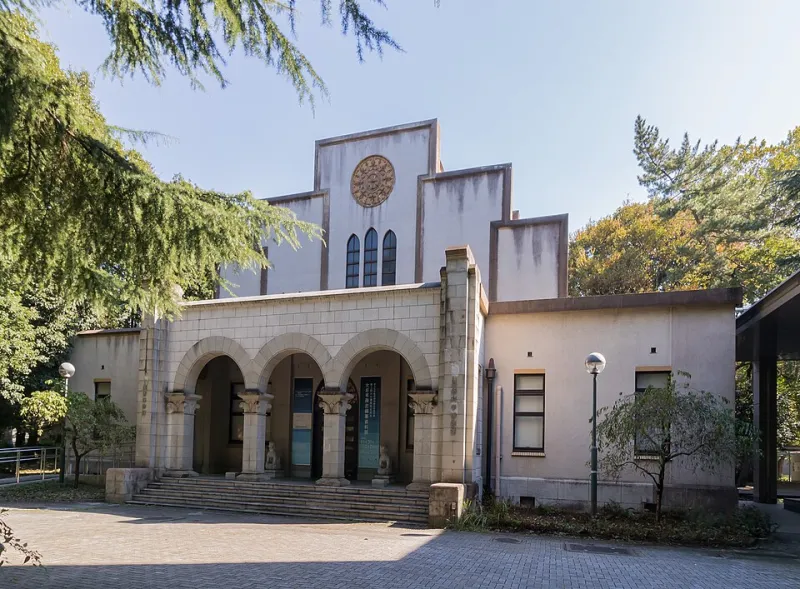
Photo: Kakidai, CC BY-SA 4.0, via Wikimedia Commons
When American students imagine studying in Japan, they often picture the country's technological sophistication, its global research reputation, and the prestige of institutions like Tokyo University or Waseda. What they rarely picture — until they are sitting in their first lecture — is a professor speaking without pause for ninety minutes, fielding no questions, and exiting the room before most students have closed their notebooks.
The pedagogical distance between American and Japanese higher education is real, consequential, and worth understanding in detail before you board a flight to Narita. This is not about one system being superior to the other. It is about recognizing that Japan's universities operate according to a coherent philosophy — one that differs fundamentally from the participatory, feedback-driven model that most American students have spent their entire academic lives inside.
The Lecture as a One-Way Transmission
In the United States, the college classroom is broadly understood as a space for dialogue. Professors at American universities — from community colleges to Ivy League institutions — typically invite questions, pause for discussion, and evaluate students partly on their willingness to engage verbally. Participation grades are common. Office hours are expected to be used.
Japanese university lectures, particularly in traditional institutions, tend to operate differently. The professor is understood as a knowledge authority, and the lecture format reflects that status. Information flows in one direction. Students take notes. Questions, when they occur, are often reserved for after class or for a teaching assistant, not directed at the professor mid-lecture.
For American students accustomed to raising their hand freely, this can feel isolating at first — even discouraging. It is worth reframing the experience. In Japan, attentive, respectful listening is itself considered a form of academic engagement. Your silence in the lecture hall is not passive; it signals respect for the professor's expertise and the learning environment.
Grading Philosophies That May Surprise You
Another significant adjustment involves how academic performance is measured. American universities typically rely on continuous assessment: papers, quizzes, midterms, class participation, and cumulative grading spread across an entire semester. Students receive frequent feedback and can often calculate their standing at any point during the term.
Many Japanese university courses, by contrast, hinge heavily — sometimes entirely — on a single final examination. There may be no midterm, no written assignments, and no participation component. Your grade reflects one high-stakes performance at the end of the semester.
This structure demands a different kind of discipline. Without regular checkpoints, it is easy to let coursework drift until finals season arrives. American students who rely on the rhythm of frequent deadlines to stay on track will need to build their own internal structure. Developing a consistent note-review habit from the first week of class is not optional — it is essential.
Some programs, particularly those designed for international students or offered in English, incorporate more familiar Western assessment methods. If continuous feedback matters to your learning style, this is worth investigating before you choose a program.
Faculty Relationships: Formal by Design
In the United States, the phrase "my professor" often implies a degree of personal familiarity. Students email faculty with casual directness, address some instructors by first name, and visit office hours to discuss not only coursework but broader academic ambitions and career questions.
Japanese academic culture maintains a more formal hierarchy between faculty and students. Professors are addressed with clear markers of respect — always by title, never by given name. Approaching a professor uninvited, particularly on personal or non-academic matters, can feel presumptuous within this framework.
This does not mean Japanese faculty are inaccessible. It means access is structured differently. Many professors do hold consultations, but these interactions tend to be formal, purposeful, and relatively brief. Coming prepared with a specific, well-considered question will serve you far better than arriving with a vague sense that you want to "touch base."
Within some departments, particularly at the graduate level, the lab or seminar group (known as a kenkyūshitsu or research laboratory) functions as the primary academic community. A faculty advisor in this context may take a genuinely invested interest in students under their supervision. The relationship builds over time and through demonstrated seriousness, not through casual familiarity.
Adapting Your Learning Strategy
Succeeding in a Japanese academic environment requires more than patience — it requires deliberate strategy. Here are several practical adjustments worth making before your first semester begins.
Develop your independent study habits early. Because external feedback may be limited, you will need to assess your own comprehension regularly. Create study schedules, form peer study groups with fellow students (both Japanese and international), and use available library resources proactively.
Learn the institutional channels for help. Most Japanese universities have academic support offices and international student centers that can connect you with tutors, advisors, or language assistance. These offices exist precisely because the faculty-student dynamic may not naturally produce the support American students expect. Use them without hesitation.
Observe before you act. In your first weeks, watch how Japanese classmates interact with professors, submit assignments, and navigate campus life. This observational period is not wasted time — it is reconnaissance that will inform every subsequent decision you make.
Communicate through appropriate channels. If you need to contact a professor, email is generally preferred and should be written formally. Many universities provide guidelines on proper academic correspondence in Japanese; following these conventions signals seriousness and earns goodwill.
What the System Is Actually Teaching You
There is a broader lesson embedded in the experience of adapting to Japanese academic culture, and it extends well beyond any single course or semester. Japan's educational philosophy places significant value on self-directed learning, patience, and the ability to extract meaning from limited external guidance. These are not weaknesses in the system — they are deliberate outcomes.
American students who successfully navigate this environment often return home with a notably expanded professional toolkit: the ability to perform under high-stakes, low-feedback conditions; the discipline to self-manage without external deadlines; and a nuanced understanding of how to operate across cultural expectations. Employers and graduate programs notice these qualities.
The adjustment is genuinely challenging. There will be moments when the absence of familiar academic scaffolding feels disorienting. But the students who thrive are typically those who arrive with realistic expectations, a willingness to adapt, and an understanding that the Japanese classroom is not a broken version of what they know — it is a different system with its own internal logic, and learning to operate within it is part of the education itself.