When Staying Quiet Costs You: How American Students Can Learn to Seek Help in Japan Without Breaking the Rules

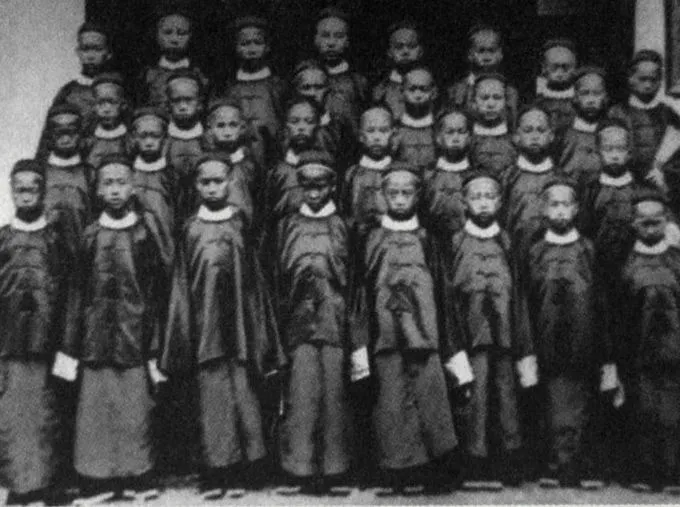
Photo: Abbot Academy, CC BY-SA 4.0, via Wikimedia Commons
For most American students, asking a professor a question after class is second nature. Office hours exist precisely for that purpose. Tutoring centers are advertised at freshman orientation. Study groups are encouraged. The entire architecture of American higher education is built on the assumption that seeking help is not only acceptable — it is expected.
Arrive at a Japanese university, and that assumption dissolves almost immediately.
This is not a minor cultural footnote. For American students studying in Japan, the unspoken rules governing when, how, and whether to ask for academic assistance can quietly undermine their performance, their mental health, and their ability to form meaningful relationships with faculty. Understanding what is actually happening in these environments — and why — is the first step toward navigating them with both competence and cultural sensitivity.
Why Japanese Academic Culture Prizes Restraint
Japanese universities operate within a broader social framework that places significant value on meiwaku — the concept of causing inconvenience or burden to others. Asking a professor to repeat an explanation, requesting an extension on a deadline, or admitting confusion in a seminar context can all be perceived, consciously or not, as imposing on someone who has already fulfilled their obligation by delivering the lecture.
This dynamic is reinforced by the hierarchical nature of Japanese academic relationships. Professors occupy a position of considerable authority, and students are generally expected to receive instruction rather than challenge or complicate it with requests. In many Japanese classrooms, silence following a lecture is not a sign of disengagement — it is a form of respect.
The contrast with American academic norms is stark. In the U.S., a student who never visits office hours may actually concern a professor. In Japan, a student who visits too frequently, or who asks questions that suggest the lecture was unclear, may inadvertently imply that the instructor failed to communicate effectively. The social calculus is almost entirely reversed.
The Psychological Weight of Enforced Silence
For American students, the adjustment to this environment is rarely just academic — it is deeply personal. Many describe a creeping sense of isolation that sets in during the first semester, not because they lack social connections, but because the academic setting offers no outlet for the kind of verbal processing they relied on back home.
When confusion cannot be voiced, it compounds. A student who misunderstands an assignment rubric in week two may spend the remainder of the semester operating on a flawed assumption, unwilling to ask for clarification because every interaction with the professor has signaled that doing so would be unwelcome. The result is not just a lower grade — it is a sustained experience of intellectual helplessness that can erode confidence in ways that outlast the semester.
This is worth naming clearly: the difficulty American students face in Japanese academic environments is not a personal failing. It is a structural mismatch between two educational philosophies, and recognizing it as such is essential before any practical strategies can take hold.
Reading the Signals Correctly
Not all Japanese professors are equally unreceptive to student questions, and not all contexts carry the same social weight. Learning to read the environment accurately is more useful than applying a blanket rule.
Some indicators that direct communication may be more welcome than it appears:
- After-class conversations in hallways are generally lower-stakes than questions posed during a lecture. Approaching a professor quietly as other students are leaving carries less visibility and therefore less perceived disruption.
- Email communication is often preferred by Japanese faculty for substantive questions. A carefully composed, polite email — written in Japanese if possible, or at minimum beginning with a formal greeting — can accomplish what an in-person question cannot, while giving the professor time to respond on their own terms.
- International student offices and program coordinators exist precisely to serve as intermediaries. These offices are culturally equipped to raise concerns on a student's behalf and can often clarify expectations in ways that preserve the student's standing with faculty.
- Peer networks matter enormously. Japanese students who have established relationships with faculty, or who simply understand the unwritten protocols of a particular department, can offer guidance that no orientation packet will provide.
Asking for Extensions: A Special Case
Of all the academic requests American students might need to make, asking for a deadline extension tends to generate the most anxiety — and for good reason. In Japanese universities, deadlines are frequently understood as firm commitments rather than starting points for negotiation. The American habit of emailing a professor two days before a due date to explain a difficult week is unlikely to land well in most Japanese academic contexts.
That said, genuine emergencies do occur, and students are not without recourse. The key is routing the request appropriately. Rather than approaching the professor directly, American students facing a legitimate hardship should first contact their international student advisor or academic coordinator. These individuals understand how to frame a request within the institutional structure and can advocate in ways that a foreign student, operating without full cultural fluency, may not be able to manage alone.
When a direct approach is unavoidable, framing matters considerably. A request that centers on the student's commitment to producing quality work — rather than on personal difficulty — tends to be received more favorably. Acknowledging the inconvenience to the professor, expressing genuine apology, and proposing a specific alternative deadline rather than leaving the timeline open all signal that the student understands the weight of what they are asking.
When Breaking the Silence Is the Right Call
There are circumstances in which staying quiet is not culturally sensitive — it is simply self-defeating. If a student genuinely cannot complete a course requirement because they have misunderstood a fundamental instruction, or if a health issue is affecting their academic performance, silence becomes a liability rather than a virtue.
Japanese universities do have formal support structures, even if they are less prominently advertised than their American equivalents. Counseling services, academic support staff, and international student liaisons are available at most institutions. The threshold for using them may feel higher in Japan than it does at home, but these resources exist because universities recognize that students sometimes need them.
The guiding principle for American students is this: exhaust the indirect channels first. Use email before in-person requests. Use intermediaries before direct faculty contact. Use formal support offices before informal ones. When those options have been genuinely explored and the problem persists, speaking up directly — with care, with appropriate formality, and with a clear sense of what you are asking for — is not a violation of cultural norms. It is a reasonable response to a situation that has exceeded what silence can resolve.
Adjusting Without Disappearing
Studying in Japan requires genuine adaptation, and learning to operate within a more restrained academic culture is part of that process. But adaptation is not the same as erasure. American students who suppress every instinct to ask, clarify, or seek support in the name of cultural compliance are not integrating — they are simply suffering quietly.
The goal is calibration: understanding which requests are appropriate, which channels carry less social risk, and how to frame communication in ways that are respectful of Japanese academic norms without abandoning the self-advocacy that effective learning requires. That calibration takes time, and it is rarely comfortable at first.
What makes the difference, more often than not, is the willingness to observe carefully before acting — to watch how Japanese peers interact with faculty, to ask questions of international student staff rather than professors, and to treat every miscommunication as information rather than failure. Silence, in Japan, is not the enemy. It is a language worth learning to speak fluently, even as you figure out when to set it aside.