When the Menu Doesn't Have an Option for You: Navigating Dietary Restrictions as an American Student in Japan
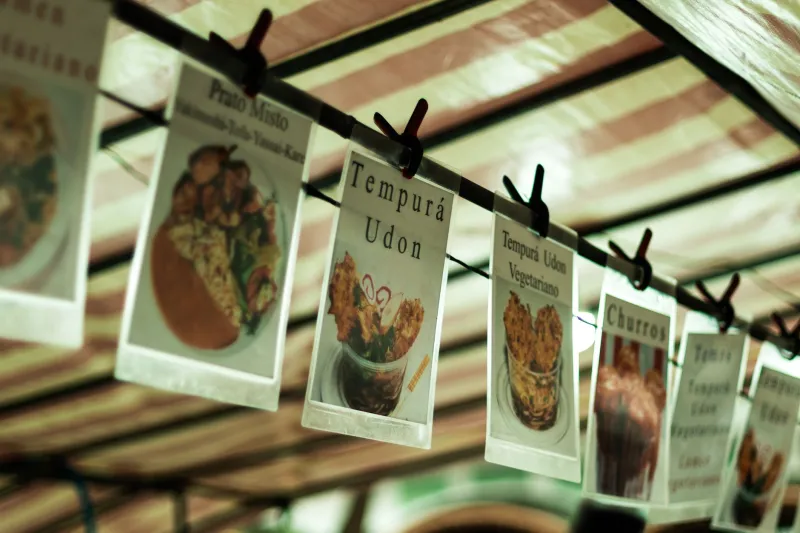
Japan's culinary reputation is formidable, and for good reason. The food is precise, seasonally attentive, and available at a quality level that routinely surprises visitors. For most American students, eating in Japan is an unqualified pleasure. For students with dietary restrictions — whether driven by health, ethics, or religious conviction — the experience is considerably more complicated.
This is not a reason to avoid studying in Japan. It is a reason to prepare carefully, because the challenges are real and the stakes are higher than simply going hungry for a meal.
Why Japan's Food Environment Is Particularly Challenging
The core difficulty is not a lack of variety or quality. It is structural. Japanese cuisine relies heavily on a small number of foundational ingredients that appear in nearly every dish, often invisibly. Dashi — a stock made from dried fish and seaweed — forms the base of miso soup, many noodle broths, and countless sauces. It is present in dishes that appear, on the surface, to be vegetarian. Soy sauce, which contains wheat, is ubiquitous. Sesame, shellfish derivatives, and pork-based stocks appear in contexts where American diners would not expect them.
This creates a specific problem for students with allergies or restrictions: the dish you are eating may contain an ingredient that was never listed, not because the restaurant is being careless, but because that ingredient is so fundamental to Japanese cooking that it does not occur to anyone to mention it.
For vegetarians and vegans, this means that ordering what appears to be a plant-based dish does not guarantee a plant-based meal. For students with celiac disease or serious gluten sensitivity, soy sauce alone represents a significant and pervasive risk. For those observing halal or kosher dietary laws, the challenges extend to sourcing, processing, and certification in ways that require dedicated research before each meal.
The Communication Gap Is Real — and Requires Preparation
Restaurant staff in Japan are generally attentive and willing to help, but dietary restriction communication involves vocabulary that most basic Japanese language courses do not cover. The phrase "I am vegetarian" (watashi wa bejitarian desu) is understood by some staff and not others, and even when understood, may not translate into the kind of ingredient-level awareness that a restriction requires.
Preparing written explanation cards — known colloquially as allergy cards or dietary cards — is one of the most consistently recommended strategies among long-term international residents with restrictions. These cards, written in clear Japanese, specify exactly what you cannot eat and why. They are not foolproof, but they shift the communication from a verbal exchange that may be misunderstood to a written document that kitchen staff can consult.
Several online resources and apps offer pre-written Japanese allergy card templates. The Equal Eats platform and the Allergy Translation app both allow users to generate printable cards in Japanese covering a wide range of restrictions. Having multiple copies on your phone and as printed cards is a practical precaution.
For students with severe allergies — particularly to shellfish, peanuts, or tree nuts — it is worth noting that cross-contamination practices in Japanese kitchens are not always aligned with the standards American students may be accustomed to. Communicating the severity of your allergy, not merely its existence, is essential. The Japanese phrase arerugii ga arimasu (I have an allergy) is a start, but specifying that a reaction can be serious (jūdai na hannō ga okoru kanōsei ga arimasu) adds necessary context.
Navigating Campus Dining
University cafeterias (shokudō) in Japan typically offer a rotating set of fixed-price meals built around Japanese dietary norms. They are affordable and convenient, but the menu options for students with restrictions are usually limited. Some larger university cafeterias in urban areas have begun labeling allergens and offering vegetarian options in response to growing international student populations, but this is not universal.
The most practical approach is to visit your campus cafeteria in person during the first week and speak with staff directly about your needs. Many universities also have international student offices that can facilitate this conversation or provide translated dietary information. Do not assume that because a cafeteria is on a university campus it will automatically accommodate dietary restrictions — assume the opposite, and be pleasantly surprised if it does.
Convenience stores (konbini), which are ubiquitous in Japan, are underrated resources for students with restrictions. They stock a wide range of packaged foods with full ingredient labels, and their offerings have expanded significantly in recent years. Onigiri (rice balls) without fillings, plain rice dishes, and certain fruit and vegetable options are reliably safe for many restriction types. Learning to read Japanese ingredient labels — or using a translation app — turns the convenience store into a reliable backup option.
Grocery Shopping and Cooking as a Long-Term Strategy
For students in university housing with kitchen access, cooking independently is the most reliable path to managing dietary needs. Japan's supermarkets are well-stocked, and certain international grocery stores in major cities — including those catering to South Asian, Middle Eastern, and Western expat communities — carry specialty items that are difficult to find elsewhere.
In Tokyo, areas such as Shin-Okubo (known for Korean and international groceries), Nishi-Shinjuku, and certain neighborhoods in Minato-ku have stores carrying halal-certified meats, imported gluten-free products, and specialty vegan ingredients. Osaka's Namba and Shinsaibashi areas have similar resources. Outside major metropolitan centers, the options narrow, and students at regional universities should plan to order some specialty items online through platforms such as iHerb, which ships to Japan, or Japanese e-commerce sites that carry imported goods.
For gluten-free cooking specifically, Japan presents a paradox: rice is the dominant grain, which is naturally gluten-free, but soy sauce is so pervasive that eliminating gluten requires constant vigilance. Tamari — a Japanese soy sauce variant that is traditionally wheat-free — is available in most supermarkets and is an essential pantry item for gluten-free students.
The Social and Emotional Dimension
Food in Japan is not merely sustenance. It is one of the primary social currencies of campus and professional life. Group meals, department lunches, club outings, and casual gatherings almost always center on food. For students who cannot participate fully in shared meals, the social cost is real.
Declining food that has been offered or ordered on your behalf can feel awkward in any culture. In Japan, where group harmony and the effort of the host carry significant social weight, it can feel particularly fraught. American students sometimes describe the experience of explaining restrictions at a group meal as exhausting — not because Japanese peers are unkind, but because each explanation requires navigating language gaps, managing the host's potential embarrassment, and resisting the pressure to simply accept food that may be harmful.
A few practical approaches help. Communicating restrictions in advance — before the restaurant is chosen, not after you arrive — allows the group to select a venue that works for everyone. Framing the restriction as a health matter rather than a preference tends to generate more understanding. And identifying a small number of trusted friends who understand your needs and can help navigate group food situations on your behalf reduces the burden of having to explain yourself every time.
The emotional labor of eating differently in a food-centric culture is genuine and should not be minimized. Building a support network of other international students with similar restrictions, connecting with expat communities online, and locating a few reliable restaurants where you can eat safely and without stress creates a foundation that makes the harder moments more manageable.
Practical Resources to Know Before You Arrive
Before departure, it is worth spending time with a few key resources. HappyCow maintains a database of vegetarian and vegan-friendly restaurants in Japan searchable by city. Halal Gourmet Japan and the Japan Halal Association both maintain directories of certified restaurants and food producers. The Coeliac Society of Japan and various expat forums on Reddit (particularly r/japanlife) have active communities addressing gluten-free living in Japan with city-specific recommendations.
Your university's international student office is also an underutilized resource. Many offices maintain lists of local restaurants that accommodate common restrictions, and some have relationships with campus food service providers that can facilitate accommodation requests.
Arriving in Japan with a dietary restriction does not mean arriving at a disadvantage. It means arriving with a plan.