Rethinking the Classroom: Understanding the Philosophy Behind Japanese Higher Education

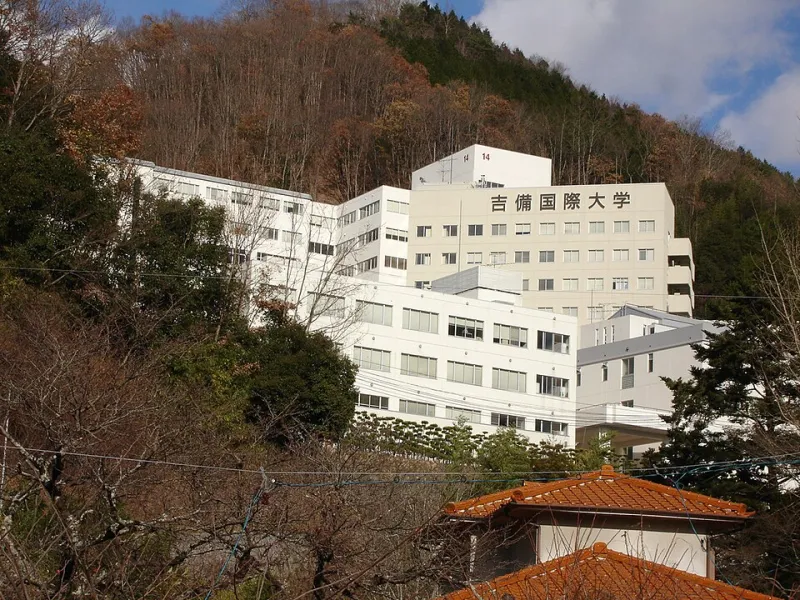
Photo: 和子, CC BY-SA 4.0, via Wikimedia Commons
American students preparing to study in Japan tend to focus their energy on the practical essentials — securing a visa, arranging housing, budgeting for daily expenses. These are all legitimate priorities. But there is a layer of preparation that many guides overlook entirely: the philosophical foundations that govern how Japanese universities think about teaching, learning, and the purpose of higher education itself. Without this understanding, even the most logistically prepared student can find themselves confused, frustrated, or inadvertently disrespectful in ways they never intended.
Japanese higher education does not simply differ from the American system in policy or structure. It differs in its underlying assumptions about what a university is for, what a student's role is, and what a professor's responsibility entails. Recognizing these distinctions before you arrive will not only help you adapt — it will help you genuinely appreciate a system built on centuries of cultural reasoning.
The Principle of Wa: Harmony as an Academic Value
In American classrooms, intellectual friction is often celebrated. Students are encouraged to challenge their professors, debate their peers, and stake out contrarian positions as a demonstration of critical thinking. The underlying assumption is that truth emerges from conflict — that the best ideas survive open competition.
Japanese academic culture operates from a fundamentally different premise. The concept of wa — often translated as harmony or group cohesion — shapes social interaction at every level of Japanese society, and the university classroom is no exception. Publicly contradicting a professor or aggressively challenging a classmate's position is not typically viewed as intellectual courage; it is more likely to be perceived as a disruption of the group's collective focus.
This does not mean that Japanese students are passive or uncritical. Rather, disagreement and independent thought tend to be expressed through different channels — in written work, in private conversations with instructors, or in the careful phrasing of questions that acknowledge established views before gently introducing an alternative. For American students who equate silence with intellectual disengagement, this adjustment can be one of the most significant of their academic experience.
Hierarchy, Respect, and the Sensei Relationship
The word sensei carries considerably more weight than its English equivalent, 'teacher.' In Japanese educational culture, the relationship between student and professor is shaped by a deep respect for hierarchical seniority — a value rooted in Confucian traditions that have influenced East Asian societies for centuries.
In practical terms, this means that the casual familiarity many American students maintain with their professors is unlikely to translate smoothly. Addressing a professor by their first name, dropping into office hours without a formal appointment, or sending a breezy, informal email are all behaviors that may be received quite differently than intended. Formal address, appropriate honorifics, and a measured, respectful tone in written and spoken communication are not bureaucratic formalities — they are expressions of a deeply held cultural value.
This hierarchical structure also extends to relationships among students themselves. Senior students (senpai) hold a recognized social authority over junior students (kohai), and this dynamic influences how group projects are managed, how study groups are organized, and even how social events within academic departments are structured. Understanding your place within this system — and navigating it with genuine respect rather than performative compliance — will significantly affect your experience both inside and outside the lecture hall.
Independent Learning and the Expectation of Self-Direction
One of the more surprising aspects of Japanese university culture for American students is the degree to which independent learning is assumed rather than scaffolded. In many American universities, professors provide detailed syllabi, regular check-ins, and structured pathways through course material. Academic advising systems are designed to catch students who fall behind.
Japanese universities, particularly at the undergraduate level, often operate with considerably less hand-holding. Professors may deliver lectures with minimal interactive components and expect students to synthesize material independently. Office hours may be less frequently utilized, and the expectation that students will proactively seek guidance is not always matched by formal systems that make doing so straightforward.
For self-directed learners, this can be genuinely liberating. For students who have relied on structured academic support, it can feel isolating. The key is to develop a proactive relationship with your own learning before you arrive — to understand that in the Japanese academic context, taking initiative is not optional. It is the default expectation.
Club Culture and the 'Real' University Education
It would be incomplete to discuss Japanese university philosophy without acknowledging the central role of bukatsu — extracurricular club activities — in the broader educational vision. In Japan, the university experience is not conceived as purely academic. Participation in sports clubs, cultural societies, and volunteer organizations is considered a fundamental component of character development and social formation.
Many Japanese employers place as much weight on a graduate's club involvement as on their academic record, viewing sustained commitment to a group activity as evidence of discipline, teamwork, and perseverance. For international students, engaging with club culture is one of the most effective ways to form genuine connections with Japanese peers and to understand the values that Japanese higher education is actually designed to cultivate.
Approaching your time at a Japanese university as purely a classroom exercise means missing a significant portion of what the institution believes it is offering you.
Preparing Your Mindset, Not Just Your Documents
The most useful thing an American student can do before studying in Japan is to interrogate their own assumptions about what a university should be. The American model — with its emphasis on individual expression, faculty accessibility, and structured academic support — reflects specific cultural values, not universal educational truths.
Japanese higher education reflects a different but equally coherent set of values: collective responsibility, earned respect, self-directed growth, and social formation through shared experience. Neither system is superior. But only one of them will govern your daily academic life in Japan, and arriving with genuine curiosity about its logic — rather than a determination to transplant your existing habits — will make an enormous difference in the quality of your experience.
Studying in Japan is not simply studying in a different location. It is studying within a different philosophical framework. The students who thrive are almost always the ones who understood that distinction before they landed.